


Body Composition Analysis in Laurel, MD
Dr. Bermesola Dyer, DNP, APRN, FNP-C, and the professional team at The Wellness NPs in Laurel, MD, offer body composition analysis. This evaluation is used to determine percentages of muscle, fat, and water that make up a person’s total body weight. Body composition analysis not only provides insight into the amount of muscle someone has but also helps identify risk factors associated with lifestyle diseases like hypertension and diabetes. For more information, contact us today or book an appointment online. We are conveniently located at 9658 Baltimore Ave, Suite 420 College Park, MD 20740.
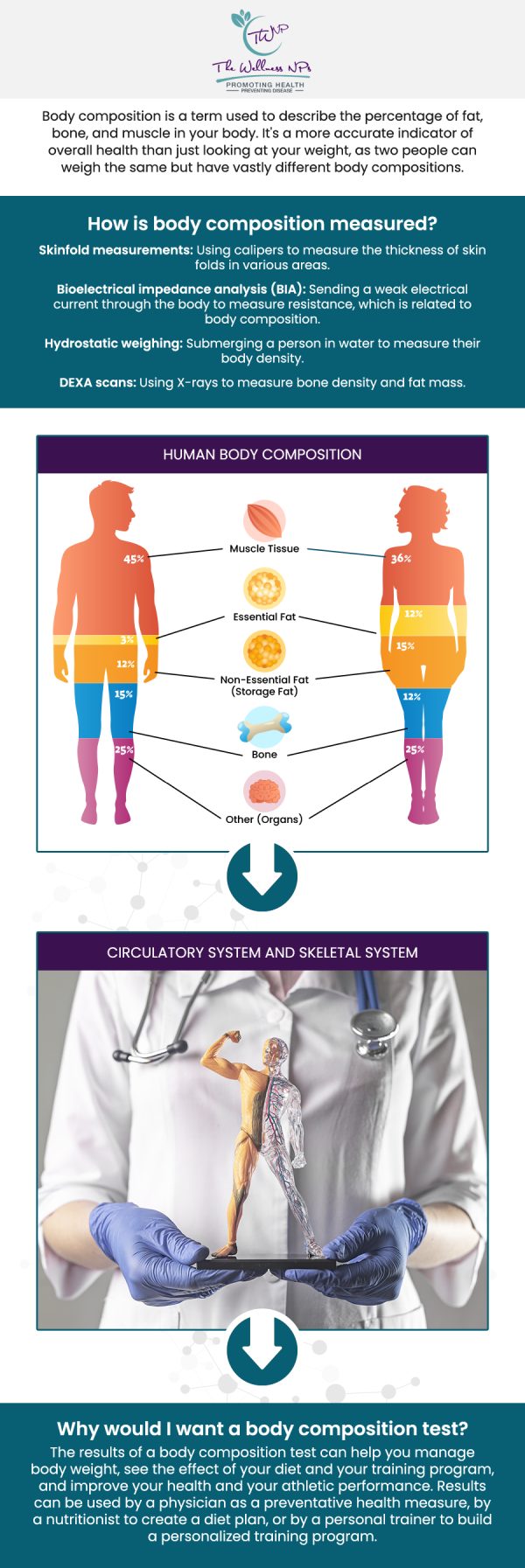
Table of Contents:
How can we measure body composition?
What are the 4 categories of body composition?
What are 3 ways to test a person’s body composition?
How do you read a body composition analysis?
Providing an accurate analysis of body composition can be a valuable tool in helping people reach their goals, creating healthy lifestyle changes, and maintaining overall well-being. The Wellness NPs use advanced technologies to measure the amount of fat and muscle someone has in order to provide them with detailed insight into their body composition. This knowledge can be used to create a plan for achieving individual health and wellness goals. By understanding body composition, individuals can make informed decisions about their diet, exercise routine, and other lifestyle factors that may influence their overall well-being.
Measuring body composition involves determining the relative percentages of different tissues that make up a person’s total body weight, moving beyond the limitations of standard scales or body mass index (BMI). Because direct measurement is impossible in living humans, health professionals use indirect methods ranging from simple physical assessments to advanced imaging technologies.
These techniques rely on the distinct physical properties of human tissues—such as how they conduct electricity, displace air or water, or absorb low-level X-rays. For instance, fat tissue contains significantly less water and is a much poorer conductor of electricity than lean muscle mass, allowing specific devices to estimate fat levels based on electrical resistance. Other methods measure physical dimensions, like skinfold thickness, to predict overall body density. Ultimately, measuring body composition provides a crucial window into metabolic health, guiding targeted fitness, dietary, and medical interventions far more effectively than simply tracking total body weight.
The most scientifically rigorous model for understanding human physical makeup divides the body into four distinct categories, collectively known as the four-compartment (4C) model.
The first category is body fat (adipose tissue), which stores energy, insulates organs, and regulates hormones. While excess fat poses metabolic risks, a baseline amount is essential for survival. The second category is total body water, which represents the largest single component of human weight, comprising the vital fluids both inside and outside of your cells. The third category is protein, primarily reflecting your skeletal muscle mass and the structural components of your internal organs. Finally, the fourth category is bone mineral, which accounts for the density, strength, and structural integrity of your skeletal system.
While simpler models only separate “fat mass” from “fat-free mass,” this four-category approach accounts for individual variations in hydration and bone density, offering a comprehensive metabolic profile.
There are several highly effective ways to test body composition, ranging from low-cost manual tools to advanced laboratory imaging.
Dual-Energy X-ray Absorptiometry (DEXA) is widely considered the clinical gold standard. It uses low-dose X-rays to provide a highly precise, detailed breakdown of bone density, fat tissue, and muscle mass across different regions of the body.
Bioelectrical Impedance Analysis (BIA) is a much faster, more accessible method commonly found in consumer smart scales and wellness clinics. It sends a safe, imperceptible electrical current through the body; since fat conducts electricity poorly compared to muscle and water, the device uses this resistance to accurately estimate body fat percentage.
Skinfold Calipers offer a manual, cost-effective approach. A trained professional pinches subcutaneous fat at specific sites (like the triceps or abdomen) and uses the millimeter thickness in standardized physiological equations to calculate a patient’s overall body density and fat ratio.
A body composition analysis provides detailed insight into a person’s body composition. This can be used to assess the amount of fat, muscle, bone, and water in someone’s body. Generally, a body composition analysis will provide information about the individual’s weight and height as well as measurements of percent body fat, percent lean body mass, and BMI. The results of the analysis can be used to assess one’s risk of obesity-related diseases and also provide a baseline for creating an individualized plan to reach health and wellness goals.
Body composition analysis is a valuable tool for assessing an individual’s overall health, helping them to reach their personal goals and manage their physical fitness. At The Wellness NPs in Laurel, MD, Dr. Bermesola Dyer, DNP, APRN, FNP-C, and the professional team offer advanced technologies such as bioelectrical impedance analysis (BIA), dual-energy X-ray absorptiometry (DXA) scans, and computed tomography (CT) scans to provide accurate and detailed body composition analysis. We understand the importance of understanding one’s body composition and are here to help you reach your health and wellness goals. For more information, contact us today or book an appointment online. We are conveniently located at 9658 Baltimore Ave, Suite 420 College Park, MD 20740. We serve patients from Laurel MD, Maryland City MD, South Laurel MD, Ammendale MD, Savage MD, and surrounding areas.
Check Out Our 5 Star Reviews


Additional Services You May Like
▸B12 & Lipotropic Injections
▸Body Composition Analysis
▸Covid Vaccines
▸Detox-Cleanse Supplements
▸Diabetes and Cholesterol Screening
▸Diabetes Management
▸Energy Booster: Weight Loss Supplements
▸Fitness Recommendations
▸Flu Shot & Testing
▸Health Screening
▸Lipotropic Pills
▸Meal Planning / Meal Replacements
▸Physicals
▸Virtual Plans
▸Workplace Wellness
▸Weight Loss Services
▸Weight Management Loss & Counseling
▸Weight Management Medication


 Send Text
 How May I Help You?